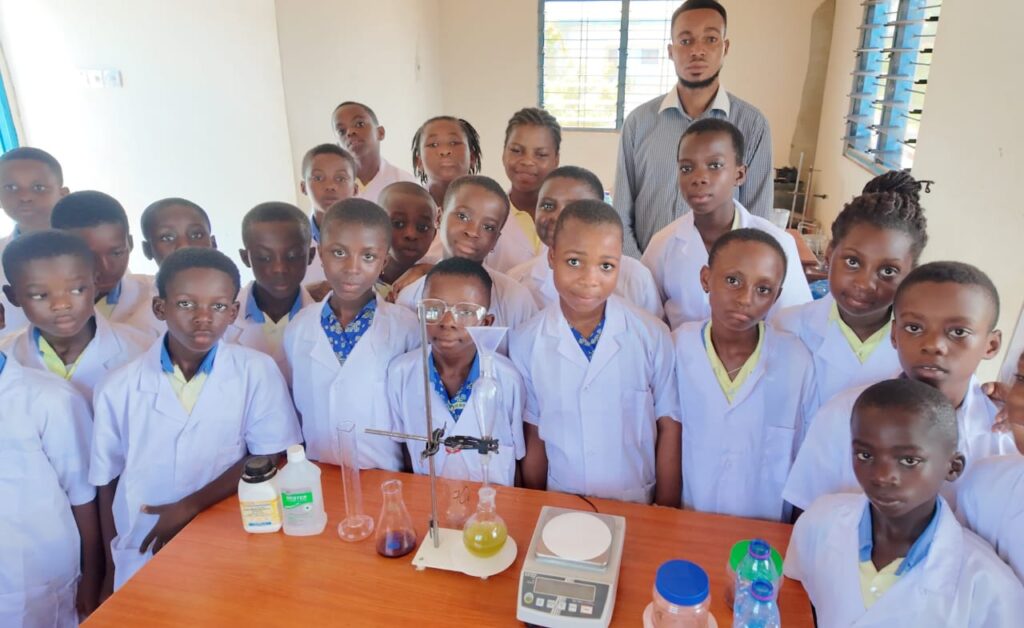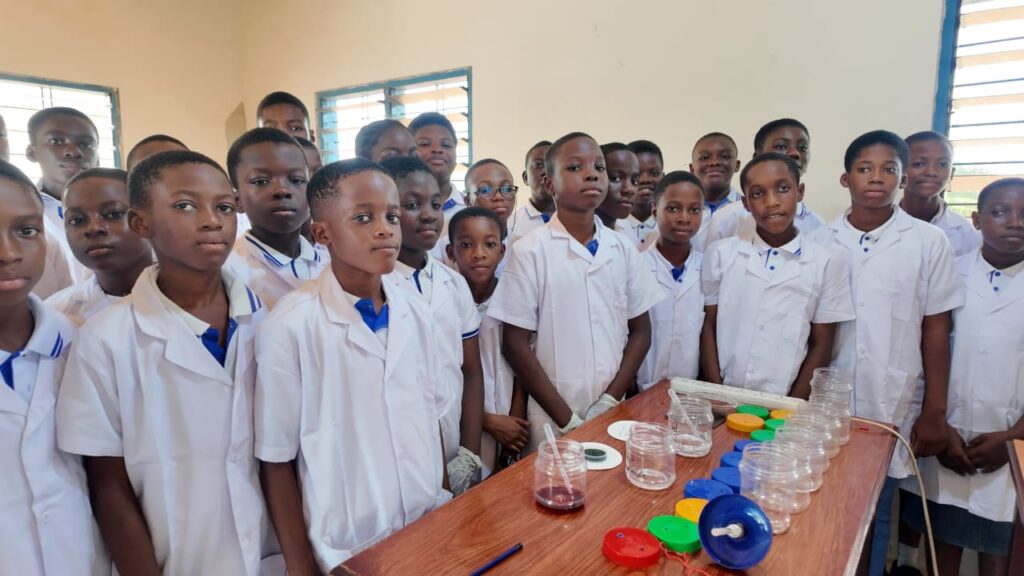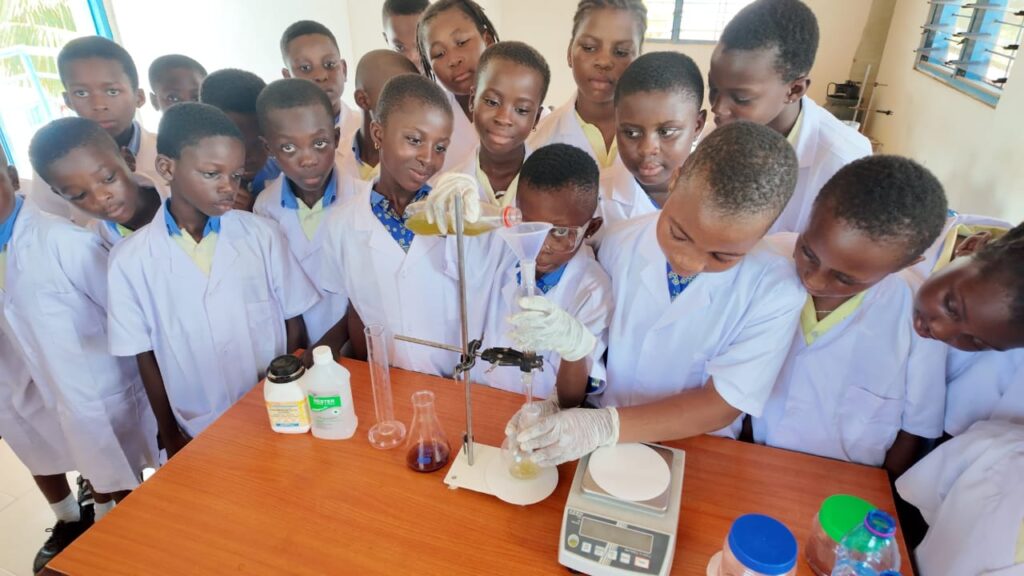
Pupils at Divine Mission Academy school in Ejisu-Donaso of the Ashanti Region of Ghana have taken an innovative step in science education by transforming everyday local plants — hibiscus and ‘nunum’ (scent leaf) into tools for real scientific discovery.
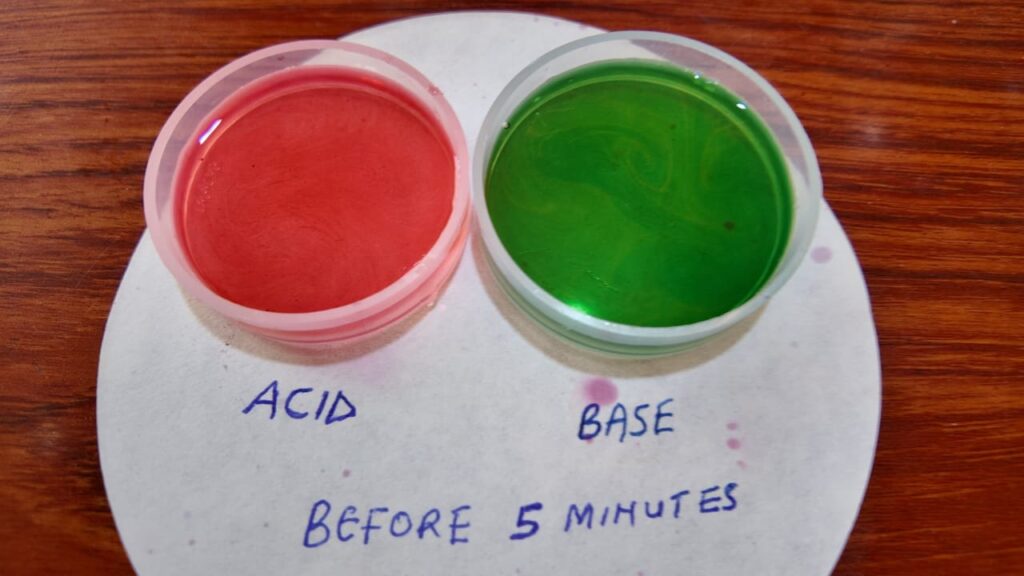
The project, carried out by learners from Primary four to Primary Six, explored how the popular Ghanaian drink sobolo, made from hibiscus leaves, can function as a natural acid-base indicator. During the experiment, the pupils observed that the sobolo extract turns to pink colour when mixed with an acid but turned green when exposed to a base, demonstrating the colour change used in chemistry to test for acidity and alkalinity.
In a second experiment that educators have described as a new discovery at the basic school level, the pupils formulated a natural hand sanitizer using nunum extract, isopropyl alcohol, and aloe vera gel. The resulting sanitizer displayed a greenish hue and carried the distinct herbal scent of nunum, showing both its cultural and scientific value. Teachers noted that nunum’s antibacterial and antiseptic properties make it an exciting natural ingredient for local hygiene innovations.
According to the supervising teachers, the project aimed to encourage curiosity and show that science is not limited to laboratories but can be found in familiar plants, foods, and traditional knowledge.
The initiative did not only test scientific ideas but also encouraged creativity, innovation, and teamwork among the pupils. Learners prepared their own extracts, recorded color changes, and compared results just like young researchers. Some even shared ideas on how the experiments could be improved for future science fairs.
“I never knew the sobolo we drink at home could be used for science,” said one excited pupil. “Now I understand that science can be found in our kitchen too!”
The success of the sobolo acid-base experiment and the nunum sanitizer formulation highlights Divine Mission Academy’s commitment to hands-on learning and its role in nurturing Ghana’s next generation of scientists and innovators.
According to the supervising teachers, the goal was to bridge the gap between theory and practice, using local materials that pupils are already familiar with. This approach deepens understanding and builds long-term interest in science.
“We are proud of our pupils,” another teacher added. “They’ve proven that Ghana’s local plants hold great scientific potential. With the right curiosity, even small classrooms can make big discoveries.”
This initiative is one of the first known examples of nunum being used in sanitizer preparation within Ghanaian basic schools — a proud achievement that blends science, culture, and creativity.
Photos: